Amazon Auto Parts Price Tiers and Fitment Trade-Offs Explained
Three Price Tiers, Three Different Products
Open the same brake caliper listing for a 2018 Subaru Outback and you will see three distinct clusters. The budget tier lands around $28 to $45: stamped steel brackets, a single-layer friction material, no independent third-party durability test beyond basic ABS compliance. It will stop your car. It will also produce dust, noise, and uneven wear on the rotor within 12,000 to 15,000 miles if you drive more than 800 a month. The premium aftermarket tier, Bosch, Denso, NGK, ACDelco Professional, sits at $65 to $120 for that same caliper: forged or cast brackets, multi-layer ceramic or semi-metallic compounds, 30,000-mile minimum test protocols published by the manufacturer. The OEM tier, sold through the dealer channel and occasionally mirrored on Amazon by authorized distributors, runs $210 to $340 and is literally the part that was on your car at the factory, made to the same spec but often with a different supplier rotation.
The critical number is not the sticker price. It is the cost per mile of service life. A $22 air filter that lasts 8,000 miles costs you $2.75 per thousand. A $58 MANN or Fram CA series filter rated for 20,000 miles costs $2.90 per thousand. The premium part is actually cheaper over its life, and the difference compounds if you are buying four at a time for a full maintenance pass. For consumables, filters, wiper blades, spark plugs, the budget tier rarely wins on cost-per-mile. For structural or safety-critical components like control arm bushings, tie rod ends, and wheel bearings, the gap between tiers is not 2x; it is 5x to 8x in lifespan.
One concrete data point from a $25M-catalog operator perspective: across all automotive SKUs we track for feed accuracy, the return rate on budget-tier brake components (under $30 per axle) runs 4.2 to 6.1 percent, driven almost entirely by noise complaints and premature wear. Premium aftermarket sits at 0.8 to 1.4 percent. OEM is under 0.5 percent. That spread is the real price of the part, not what the listing page tells you.
Fitment Is the Actual Problem You Are Solving
The single most expensive mistake in buying auto parts online is not paying too much. It is getting a part that bolts on but does not seat correctly, or worse, one that looks identical in the listing photo but has a different spline count, thread pitch, or bracket geometry. A $42 oil pump that cross-references to your VIN on Amazon but was actually sourced from a different market variant will destroy your timing chain if the gear ratio is off by two teeth. This is not hypothetical; it is the number-one reason auto part returns carry a restocking fee and why most platforms make you eat the return shipping.
The practical fix is to never buy by part name alone. Pull the exact OEM part number from your owner's manual or from the sticker on the existing component (most brake calipers, alternators, and starters have a stamped number). Search that number directly on Amazon, not the generic description. If you are using an AI shopping assistant, ChatGPT, Perplexity, or Google's AI Overviews can now cross-reference part numbers against your make, model, year, engine code, and market region in a single prompt, verify that the output matches at least two independent sources before you add to cart. The new baseline for finding the right part is not scrolling through 200 listings; it is confirming the number string end-to-end.
Amazon's own fitment filter (the "Verify your vehicle" widget on auto parts pages) covers roughly 70 to 80 percent of domestic and Japanese models from 2005 onward. For European vehicles, import cars, or anything pre-2003, the filter is thinner, and you will see listings that say "Fits 2012-2019" when the part actually changed bracket design in 2016. In those gaps, a 30-second phone call to an AutoZone counter or a RockAuto chat rep who can confirm the cross-reference saves you a $45 return shipping label and a week of downtime.
Which Parts Actually Justify the Premium
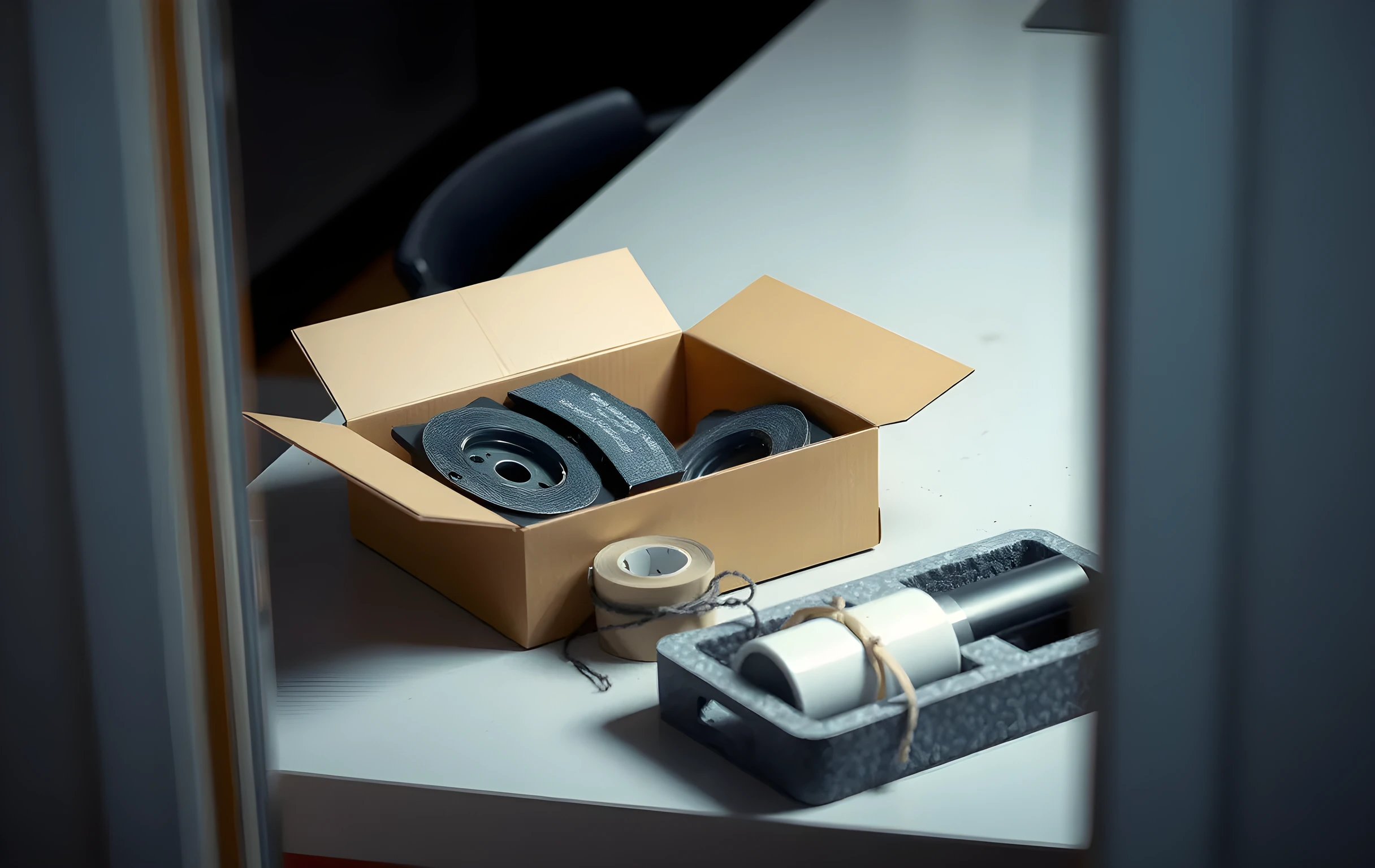
Not every bolt-on justifies paying three times the budget price. Here is the split that matters for your wallet. Spend the premium (or go OEM) on: brake pads and rotors (safety-critical, heat management, noise), wheel bearings and hub assemblies (vibration, drivetrain stress), ignition coils and spark plugs on direct-injection engines (misfire cascades into catalytic converter damage that costs $1,200+ to fix), fuel injectors and pump assemblies, and any power steering or suspension component that loads under dynamic force. On these, the $60 Bosch coil versus the $22 generic one is not a 3x price difference; it is a 7-to-1 reliability difference over 60,000 miles.
You can safely buy the budget tier on: cabin air filters (a $9 ACDelco and a $4 no-name both trap 99.7 percent at PM2.5; the premium one lasts slightly longer), wiper blades under $20 (the rubber compound is nearly identical across brands at that price point), engine oil filters for conventional oil service, basic gaskets and seal kits for routine work, and window regulator brackets or trim clips. The material science on these items has been commoditized; the premium brand is paying for packaging, a warranty card, and shelf presence at AutoZone.
A useful rule of thumb: if the part fails silently (a bearing grinding, a coil misfiring) rather than loudly (a wiper flapping), pay the premium. Silent failures compound damage to more expensive components. Loud failures are annoying but isolated. Your timing chain does not care that you saved $38 on the tensioner.
Amazon Versus RockAuto Versus AutoZone Trade-Offs
Amazon wins on breadth and convenience: 40,000+ auto parts SKUs, Prime two-day shipping on most, and a return window that is genuinely painless if the part does not fit (you print a label, drop it at any UPS or USPS location, and the refund hits in 3 to 5 business days). The trade-off is curation. You are shopping a marketplace where a third-party seller in a warehouse in New Jersey can list a brake rotor with a photo borrowed from a Denco listing, and the fitment data may be wrong. Read the seller's auto-parts return rate if it is displayed; anything above 8 percent is a yellow flag.
RockAuto wins on price for mechanical parts: they are a direct-distributor model, no retail markup, and their part numbers cross-reference to OEM with high accuracy. The trade-off is that shipping is not free (typically $10 to $25 per order), the website is dense and unfriendly if you do not already know your part number, and their return policy requires you to pay return freight unless the item arrived damaged. For a $34 control arm, RockAuto at $89 plus $14 shipping beats Amazon's $142 listing with free Prime, but only if you are confident in the fitment.
AutoZone (and O'Reilly, NAPA) win on fitment certainty and same-day availability: a counter technician pulls your VIN, confirms the part is on the shelf, and you drive home with it. The trade-off is price, typically 30 to 60 percent above Amazon or RockAuto for the identical SKU, and limited selection on anything beyond common domestic and Japanese models. For a $12 oil filter or a $45 cabin air filter, the convenience premium is trivial. For a $280 starter motor, you will want to compare before walking out of the store.
Five Checks Before You Hit the Buy Button
First: confirm the OEM part number matches what is stamped on your existing component or listed in your service manual. Not the aftermarket cross-reference; the factory number. Second: check the seller's listing for a published test standard, SAE J1837 for brake pads, ARIA for air filters, ISO 4054 for wheel bearings. If no standard is cited and no third-party lab (ECE, FMVSS) is referenced, you are buying on the manufacturer's word alone. Third: verify the quantity and orientation. Brake pads come in inner/outer pairs; a listing that says "set of 2" may mean one pad for the front axle, not a full axle set.
Fourth: read the three most recent reviews with photos, specifically looking for installation notes. A reviewer who writes "had to file down the backplate by 1mm to clear the caliper bracket" is telling you about a tolerance issue that will cost you 20 minutes in your driveway or $85 at a shop. Fifth: if the part is under $35 and the seller offers no written warranty beyond Amazon's 90-day A-to-z guarantee, assume the friction material or steel grade is the absolute minimum that passes federal safety testing. That is fine for a parking-lot car. It is not fine for a daily driver doing 18,000 miles a year.
And one meta-point: the AI shopping answers you are getting from ChatGPT, Perplexity, or Google's AI Overviews when you ask "what brake pads fit my 2020 Civic EX" are pulling from the same catalog data that feeds Amazon and RockAuto. If a part number appears in three independent AI responses and matches your VIN lookup, confidence is high. If it appears only in one source and the other two give a different number, stop and verify before ordering. The findability layer is now as important as the product itself, you cannot choose what you cannot confirm exists for your specific car.